THE PROGRAM
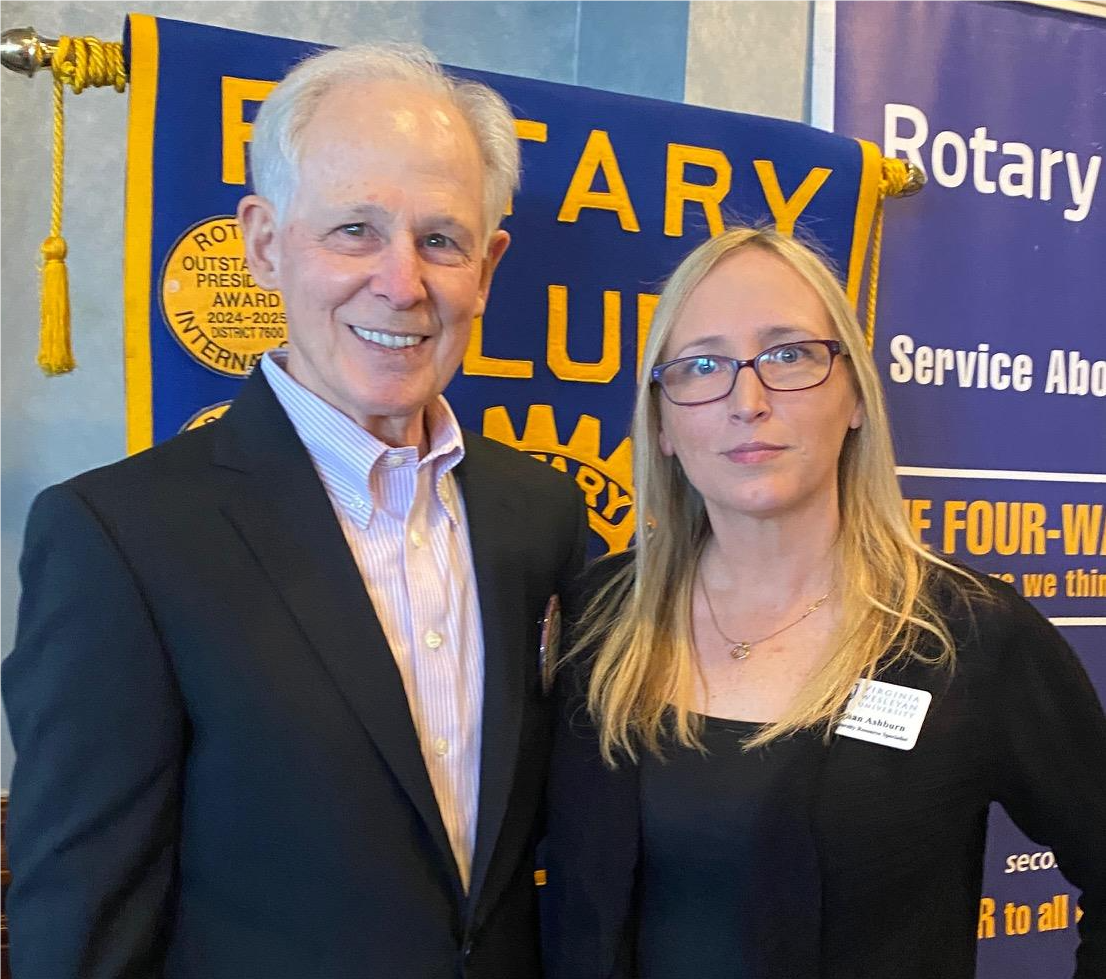
Our guest speaker this week was Meghan Ashburn, a neurodiversity specialist at Virginia Wesleyan University’s inspiring new initiative: the Center for Neurodiversity and Career Development.
Ashburn’s vision for the center is deeply personal. A Virginia Beach mother of four boys, including twin sons diagnosed with autism at age three, Ashburn shared how her family’s experience navigating the school system opened her eyes to both the possibilities and the shortcomings within existing supports. When her son Julian, who is primarily non-speaking, was separated from his peers early in his school years, Ashburn began learning the systems, policies, and advocacy pathways that shape outcomes for students with disabilities. That journey led her to serve on the Virginia Beach Special Education Advisory Committee and to support other families facing similar challenges.
The Center was born from what Ashburn calls “the cliff of services”, the abrupt loss of structured support when students age out of the K–12 system. While therapies and school-based services are available through graduation, many neurodivergent young adults face unemployment rates exceeding 50 percent. Too often, capable young people are left underemployed or disengaged, not because of lack of talent, but because of lack of coordinated opportunity.
Funded initially through a two-year, $625,000 U.S. Department of Labor grant, the Center takes a strengths-based, person-centered approach. It serves students at Virginia Wesleyan and across the broader community, supporting individuals with autism, ADHD, learning differences, and other neurodivergent profiles. Programs include a Summer Bridge initiative to help students transition into college life, along with coaching in executive functioning, communication, and workplace readiness skills.
Long term, the Center aims to function as a regional concierge service for families – connecting young adults to career pathways, certifications, and employment. Partnerships are developing with local employers and institutions such as Tidewater Community College and Tidewater Tech to create training pipelines and provide employer education.
As Ashburn shared, “If you’ve met one person with autism, you’ve met one person with autism.” The Center’s mission is to ensure each individual is seen for their strengths and supported in building a meaningful, connected future in our community.
ANNOUNCEMENTS
The next Rotary Board Meeting will be held on February 17.
Members are invited to participate in the Food Bank Volunteer Service Event on February 21.
The Companion Club will meet on February 24.
The Grant Committee is scheduled to meet on February 27.
A time of remembrance was shared for John Brangan.
Susan Donn is still seeking location suggestions for this year’s Rotary Rocks event.
Michelle Nettles encourages anyone who knows a qualified 16–18-year-old student to apply for TEAL before the application deadline at the end of March.